
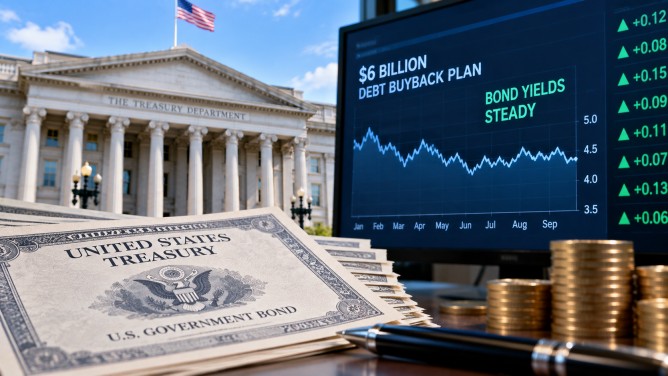
The US bond market is resisting the Treasury’s attempts to ease borrowing costs, as government bond yields continue to rise despite a new plan to repurchase $6 billion in US Treasury securities. Treasury Secretary Scott Bessent announced the buyback initiative on Wednesday, aiming to quell a selloff that has been driving interest rates higher. Yet, this move has not been enough to allay investor concerns, with the yield on 10-year Treasury bonds reaching its highest point in three years.
Further exacerbating the situation, the 30-year Treasury yield has surged to approximately 5.2%, marking its peak since the 2008 financial crisis. Investors remain jittery due to persistent inflation and the uncertainties stemming from the conflict in Iran, which have cast a shadow over US government debt, long regarded as one of the most secure investments globally. In an August announcement, Bessent revealed plans to at least double the usual debt buyback operations in hopes of stabilizing the market by reducing bond supply, theoretically lowering yields. However, yields have continued their upward trajectory since the plan’s inception.
In a broader economic context, US government debt exceeded $40 trillion in August, having doubled over the past ten years. The rising Treasury yields pose a risk of increasing borrowing costs for consumers, affecting mortgage rates, student loans, and auto financing. This pressure on the bond market complicates the US Federal Reserve’s role as it grapples with elevated inflation levels. Inflation peaked at a three-year high in May before easing to 3.4% in July, still 0.7 percentage points above the previous year’s level, driven in part by rising energy costs.
Adding to the economic concerns, oil prices have surged, with Brent crude surpassing $100 a barrel on Wednesday amid escalating tensions in the Middle East. This scenario presents a challenging dilemma for the Federal Reserve, which must balance controlling inflation through interest rate adjustments against political pressure from President Donald Trump, who has consistently advocated for lower rates. The interplay of these factors creates a complex economic landscape, with significant implications for both the domestic and global financial systems.